Specification
Ask each lithium battery manufacturer response to name usable capacity, rated power and the test basis behind cycle life. A family range is not the quoted model.
HelioLink Sourcing is an independent sourcing partner. Share the application, usable capacity, rated power, quantity and US destination so factory quotations can be requested on one basis. This page does not list stock, a factory appointment or an engineering approval.
A lithium battery manufacturer label covers many rack, cabinet and container configurations. The first brief keeps chemistry, DC voltage, thermal management and cycle-life basis as open fields until the proposed model is named.
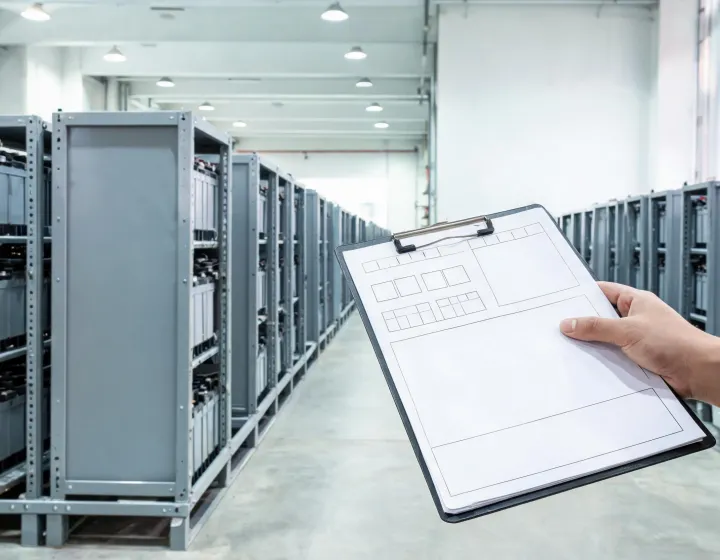
Ask each lithium battery manufacturer response to name usable capacity, rated power and the test basis behind cycle life. A family range is not the quoted model.
Keep the count and the unit together. Mixing a single cabinet price with a multi-rack lot makes the later total impossible to line up.
Record currency, packaging, freight, tax and duty treatment, included cables, warranty text and exclusions. Unit price alone is not the delivered scope.
Request the current datasheet, drawing and any applicable safety listing or UN 38.3 transport summary for the exact proposed item. ISO 9001, when offered, is a quality-system file, not a product listing.
If the project already has figures, copy them with units: a DC bus such as 48 V, 400 V or 1500 V; rated power in kW; usable capacity in kWh; a discharge window such as 2 hours or 4 hours; and ambient limits in °C. Keep maximum system voltage, MPPT and string current on a PV row when modules share the bill. A bidirectional inverter or grid-forming inverter is a different line from the battery management system.
Open the inquiry options, the quote desk, or the procurement brief before sending ratings.
Name the site type, indoor or outdoor placement, and whether the request is a cabinet, a rack line or a container. Leave AC-coupled versus DC-coupled storage undecided if the project engineer has not chosen.
Ask for both numbers, the discharge duration they assume, and whether the figure is nameplate or usable. Depth of discharge and round-trip efficiency need a stated test basis if they are part of the comparison.
List the drawing revision, the communication protocol to the inverter or EMS, and any interconnection or fire-code review that is still open. Those items stay with qualified reviewers.
No. Bind the datasheet, dimensional drawing and any UL or ETL listing reference to the exact model and the named supplier. A family brochure is only a starting map.
Give a currency and say whether the figure is per unit or for the whole order. High-end, mid-range, budget-friendly or undecided is a preference, not a rating of a factory.
HelioLink Sourcing lines up the fields you submit. Award, code review and installation stay outside this desk. Start from the requirement form when the fields are ready.
FREE sourcing support, up to 3%. Eligibility applies to qualified business buyers and is confirmed after we review your product, quantity, destination, and sourcing requirements.
Write the battery configuration, quantity, US destination and requested timing. Optional budget and supplier preference can sit in the same note.